Do not turn left at the intersection. Drivers should plan their route in advance. Even if a GPS says to turn left, do not turn left at the intersection. Find an alternate route to the destination that does not involve a left turn at the intersection.
Drivers must stop the vehicle completely by applying the brakes firmly and ensuring that the vehicle has stopped moving. "Pausing" the vehicle by braking slightly, then continuing through the intersection without stopping completely (also known as a "rolling stop") is not considered a complete stop. Drivers who do not come to a complete stop can be charged by the police. Once the vehicle is fully stopped, drivers should wait until the way is clear before entering the intersection.
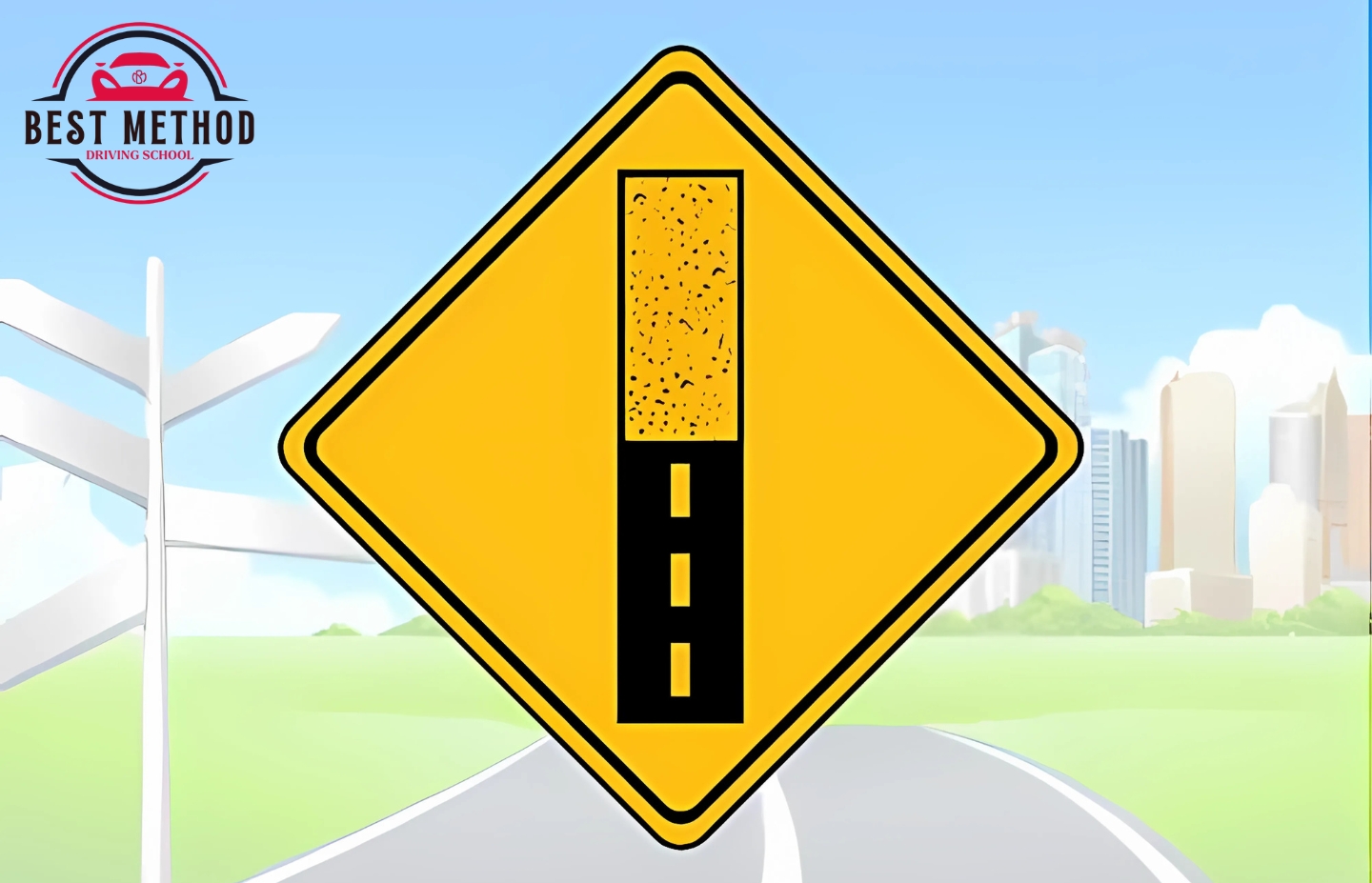
Pavement ends; slow down and drive with caution. Gravel roads can be dangerous, especially if the road has been freshly “graded” (grading a road involves spreading a fresh layer of gravel on the road to level it out). Driving at high speeds on a thick layer of gravel could cause the vehicle to fishtail or spin, and could result in an accident.
Do not make a U-turn along this section of the road. Drivers should plan their route in advance. Even if a GPS says to make a U-turn, do not make a U-turn. Find an alternate route to the destination that does not involve making a U-turn.
This sign prohibits an action. The action prohibited varies, depending on the sign. For example, if the sign includes a left turn arrow, the sign means “No Left Turns”.
Tractors, farm machinery, or any heavy “equipment” vehicles which travel at speeds of 40km/h or less must display this “Slow-Moving Vehicle” sign. When approaching a vehicle displaying this sign, drivers should slow down and be prepared to drive at a lower speed. Drivers must not pass until it is legal and safe to do so.
Two-lane section of highway ahead. Slower drivers should keep to the right. Drivers who wish to travel faster (within the speed limit) should pass on the left in the extra lane, then move back to the right lane. Smaller highways often have passing lanes at regular intervals to allow faster traffic to pass under safer conditions. Drivers should be aware that oncoming traffic may also use the extra lane to pass if conditions permit and are safe. “Keep Right Except to Pass” is the general rule when travelling in any situation where there are two or more lanes of traffic travelling in the same direction.
This sign is used to warn drivers that they are approaching a regulated intersection. This sign usually appears when an intersection is “hidden”, for example, by a sharp curve in a road. Drivers should slow down and be prepared to stop.
When travelling on a multi-lane road, slower traffic must use the right lane(s). The left lane(s) is (are) intended for vehicles that are passing other, slower traffic. Use the left lane to pass, then pull over to the right lane and travel in the right lane.
Vehicles are not permitted to enter this road. Drivers should plan their routes ahead. Even if a GPS indicates that the driver should enter the road, drivers are not permitted to enter. Find an alternate route to the destination.
Divided highway begins. Each direction has its own road. Keep to the right-hand road. The “new” road may have more than one lane, but all lanes travel in the same direction.
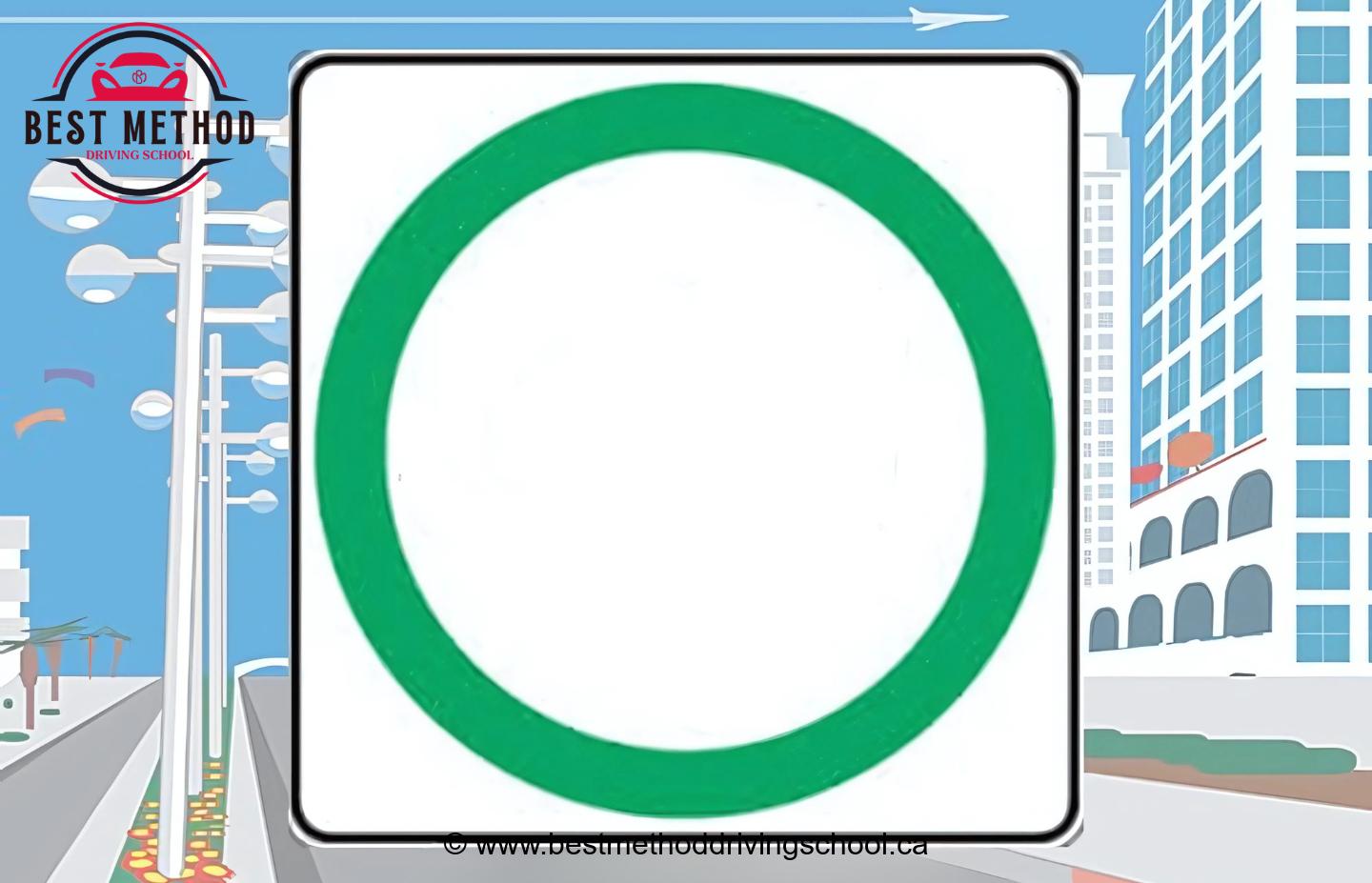
This sign permits an action. The action permitted varies, depending on the sign. For example, if the sign includes a bicycle, the sign means that bicycles are permitted to use the roadway.
Railway crossing ahead. Be alert for trains. The sign also indicates the angle at which the railway tracks cross. In this case, the symbol for the road and the symbol for the railway cross at 90◦, which indicates that the railway tracks cross at a 90◦ angle to the road.
Construction ahead. Drivers should adjust speed and be prepared to stop if necessary. Use caution when driving as there may be construction workers on duty. Be alert and watch for other related construction signs.
This sign indicates drivers must remain to the right of the traffic island. Traffic islands are used to divide a roadway into two separate sections, often at intersections.
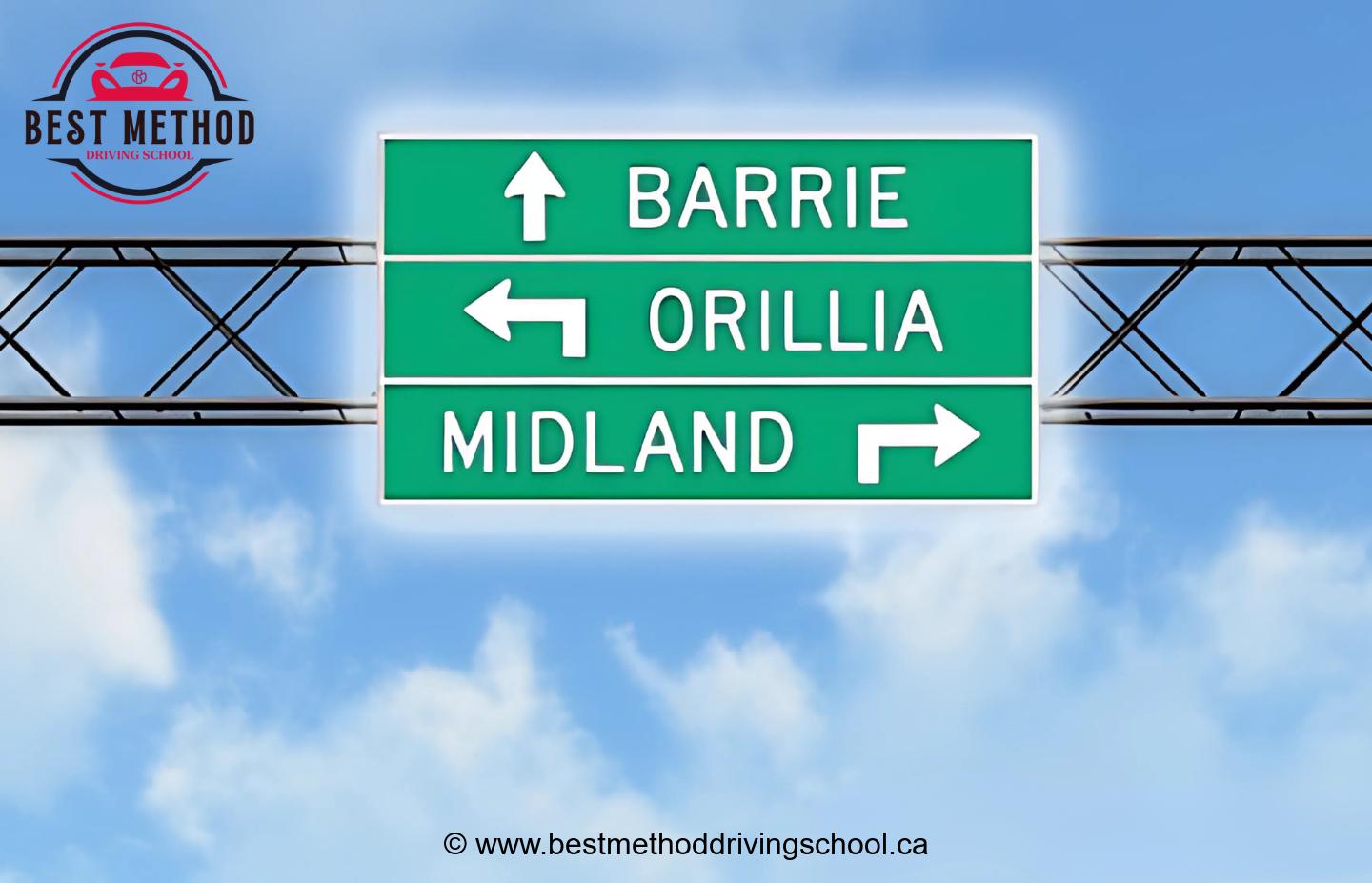
This sign shows directions to nearby towns or cities. In this case, continue on the road to get to Barrie; turn left at the intersection to travel to Orillia; turn right to go to Midland.
 Our Driving Tests